Explore these approaches to get clean air
By Rick Kreczmer, president of RoboVent, New Baltimore, Mich.
Laser welding is often praised as a “clean” process. There’s no arc flash, little spatter, and, in many cases, no visible fume. But the apparent cleanliness can be misleading. Behind every weld lies an invisible cloud of submicron particles and vaporized gases generated as the laser interacts with the base material, coatings, or filler metals. These byproducts are too small to see, yet they create serious challenges for worker health, equipment performance, and product quality. These five strategies can help protect people, processes, and equipment.
The Challenge of Laser Welding Fumes
Laser welding has become one of the fastest-growing metal joining technologies, valued for its speed, precision, and versatility. In automated production lines, robotic laser welding delivers high throughput with consistent quality, making it a mainstay in automotive, aerospace, and electronics manufacturing. At the same time, handheld and manual laser welding systems are gaining popularity for repair work, small-batch production, and applications that require mobility and flexibility.
However, laser welding produces fumes that create challenges for manufacturers if not controlled.
The following are key considerations.
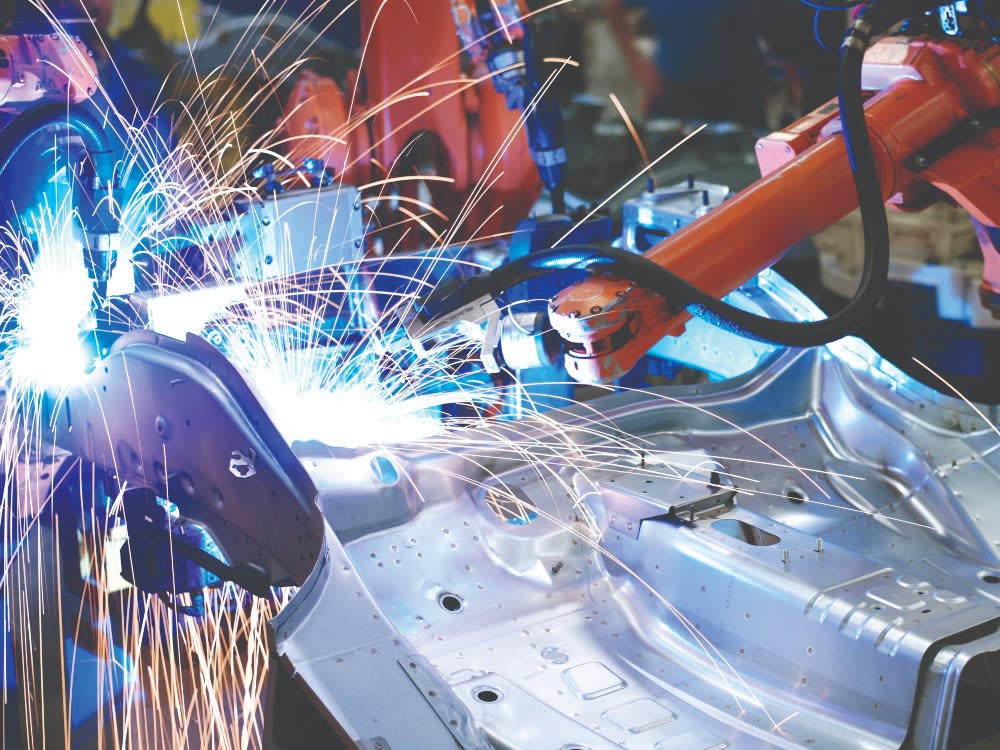
Enclosed systems aren’t immune. Robotic laser welding units are typically housed in cabinets, but if fumes aren’t properly extracted, they can build up inside the enclosure. Fugitive emissions also escape when parts cool, contaminating the wider facility.
Laser optics are highly sensitive. A haze of submicron particles inside the weld cell can refract or scatter the beam, undermining the precision manufacturers rely on. Residue buildup on lenses and shutters drives up maintenance costs and can cause unexpected downtime.
Five Strategies for Laser Welding Fume Control
Controlling laser welding fumes requires careful dust collection system engineering. The submicron particulate and gas-phase byproducts generated in these processes demand purpose-built solutions that account for airflow dynamics, enclosure design, filtration efficiency, and safety standards. The following strategies outline five approaches for achieving cleaner air.
1. Capture Fumes at the Source
The closer fumes are captured to the weld, the more effective and energy-efficient the system will be. Because laser welding produces submicron particulate that disperses quickly, source capture is the most critical design consideration.
In particular, for robotic laser welding, most robotic systems are enclosed, which creates a controlled environment for fume capture. The most effective approach is to integrate extraction directly into the enclosure with properly sized ports and ducting. Original equipment manufacturers can design these features into the cell, ensuring optics stay clean, fugitive emissions are minimized, and airflow is balanced so it does not disturb the shielding gas.
2. Right-Size Your Dust Collector
Effective source capture depends on having a dust collector sized to the process. If the collector is too small, filters will load quickly and fumes will escape; if it is too large, energy will be wasted. These two key factors drive sizing:
Airflow (ft3/min): There should be enough to maintain capture velocity at the enclosure, hood, or fume arm without disturbing shielding gas or the weld pool. In robotic systems, this often means carefully balancing airflow to clear the enclosure while protecting process stability.
Air-to-cloth ratio: Laser welding produces fine particulate that easily clogs filters, so lower ratios extend filter life and maintain efficiency.
For laser welding applications, cartridge dust collectors are usually recommended. They are compact, energy efficient, and effective for submicron particulate, with options ranging from portable units for individual weld cells to centralized systems serving multiple stations.
3. Choose the Right Filtration Media
Not all laser welding fumes are the same. Emissions vary depending on the base material and any coatings and lubricants present. Choosing the right filter media ensures effective capture and compliance with exposure limits.
MERV 15–16 cartridge filters are effective for most submicron particulate. A fire-retardant coating is typically recommended.
HEPA filters may be required for processes generating toxic metals, such as hexavalent chromium from stainless steel.
Activated carbon after-filters are recommended when coatings or lubricants create gas-phase emissions.
4. Address Fire and Explosion Risks
While laser welding produces less dust volume than cutting or grinding, the emissions can still present a fire risk. Freshly generated particulate may retain unoxidized metal, and sparks or hot surfaces inside the weld cell can ignite deposits in the ductwork or filter media in the collector. For this reason, fire detection and suppression should always be part of the system design.
Explosion risk is more situational. Most steel welding fumes are less prone to deflagration, but fine particles from aluminum, titanium, or coated materials may be explosible if not fully oxidized by the welding process. The National Fire Protection Association (NFPA) guidelines require metalworking facilities working with potentially combustible dust to confirm this through a dust hazard analysis. If explosibility is present, collectors should be equipped with a deflagration system, which may include explosion vents, isolation valves, and rotary airlocks.
5. Control Fugitive Emissions
Even with good source capture, fugitive fumes can escape. In robotic systems, this often happens when enclosures are not fully sealed or when parts continue to off gas as they exit the cell. In manual welding, the challenge is greater since work is performed in the open air.
Here’s some guidance for managing fugitive emissions:
Ensure robotic enclosures are airtight and properly ducted to prevent leakage.
For manual welding, ensure source capture methods are used consistently and properly to minimize fugitive fumes.
Consider secondary ambient air filtration in areas where multiple welds or cooling parts create background contamination.
Air quality monitoring helps confirm that emissions remain below Occupational Safety and Health Administration (OSHA) permissible exposure limits and provides early warning if controls need adjustment.
Ending Thoughts
By following these steps, manufacturers can create safer and more reliable operations while laser welding. However, because every laser welding setup is different, there is no one-size-fits-all solution. Partnering with experts in dust collection engineering helps ensure systems are tailored to the application, compliant with OSHA and NFPA standards, and designed to protect workers and equipment. The result is cleaner air, stronger welds, and greater confidence in every operation.
Reprinted with permission: The AWS Welding Journal